
Smart Green City: Economic Assistance System for Lake Constance Shipping
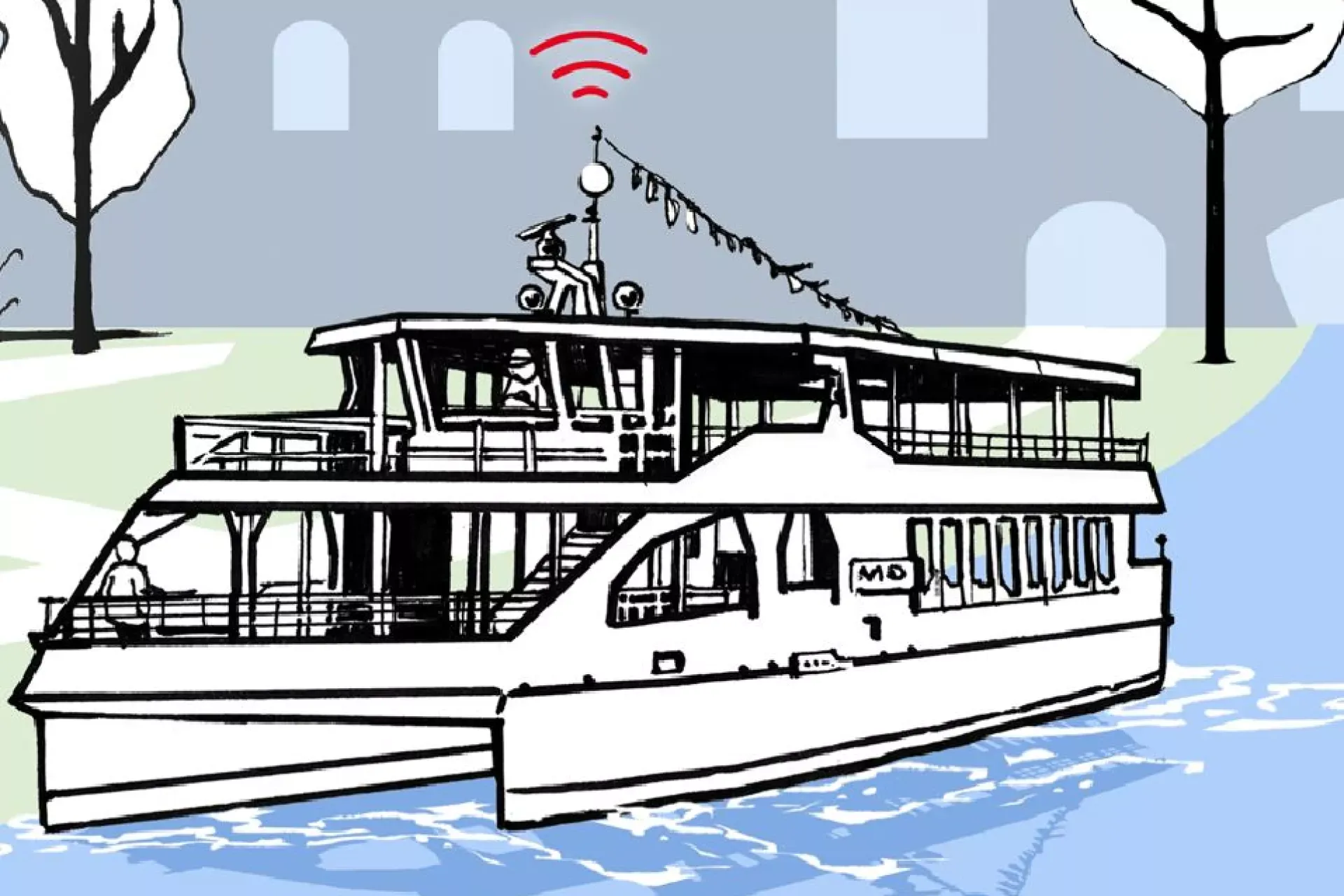
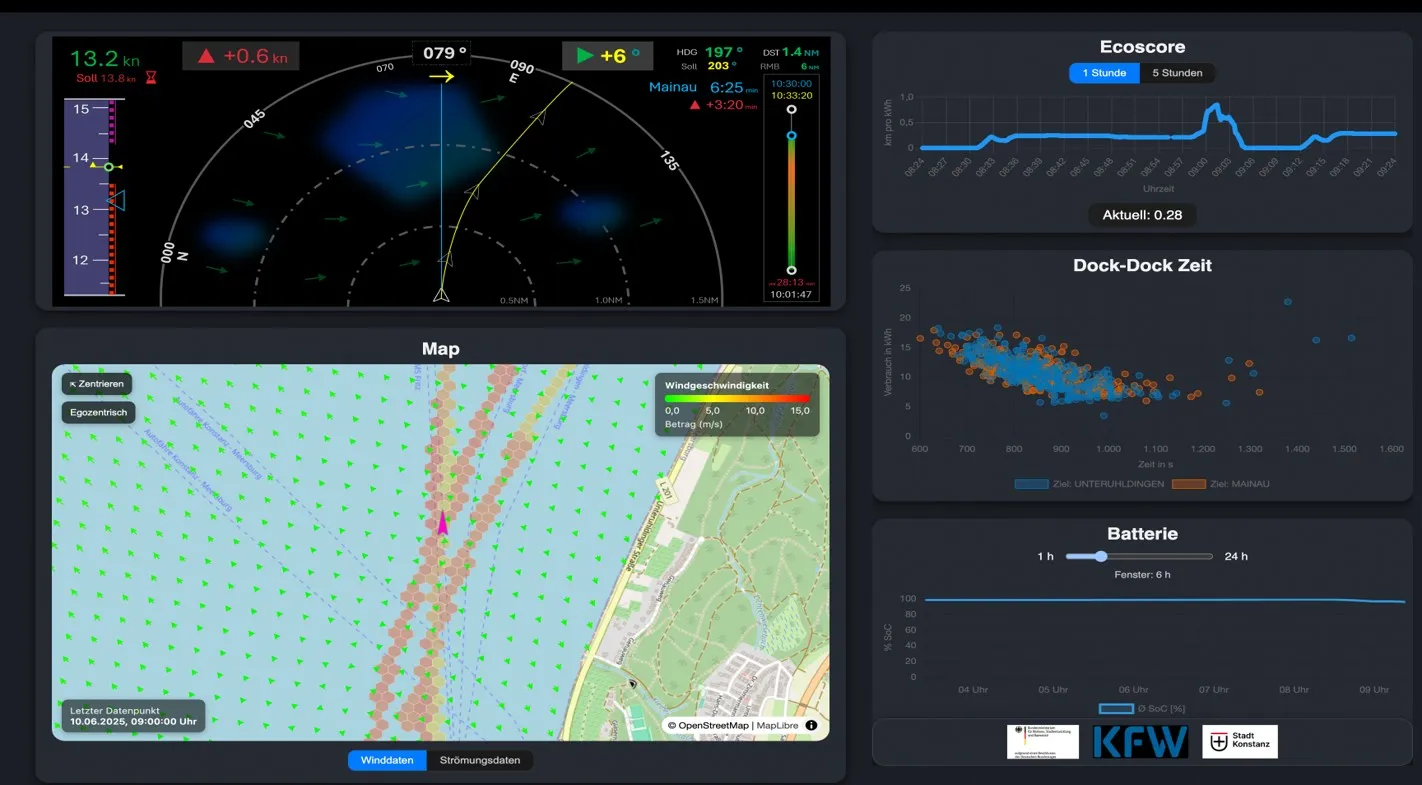
An explainable, AI-based assistance system supports the crew of the fully electric ferry MS Insel Mainau in operating the vessel energy-efficiently. The aim of the project is to optimize ship operations using AI-assisted components and to support the vessel operators, particularly in carrying out energy-efficient maneuvers. At the core of the system is a digital twin that represents a mathematical and data-based model of the vessel. Based on onboard data, wind and current information, the assistance system calculates optimized routes and courses in real time. These are additionally combined with a suitable speed profile, resulting in a maneuver that is as energy-optimal as possible. In addition to energy consumption, the system also takes into account other important constraints such as time requirements and safety. Through the optimized planning of routes and speeds, energy consumption and operating costs can be reduced. In the future, the project results could be transferred to other ships and ferries, including those with diesel propulsion. Furthermore, the insights gained could feed into the planning of partially autonomous boats. The project therefore demonstrates significant potential for more efficient and climate-friendly inland navigation.
Goals and Approach
The primary goal of the project team is to make maritime transportation more energy-efficient. For this purpose, a mathematical, data-driven model in the form of a digital twin will be developed. Based on this model, an assisted operation of the vessel will be enabled, which could achieve significant energy savings. Another key component of the project is the clear explanation and visualization of the artificial intelligence used. This is intended to foster understanding and acceptance of the technology among ship operators as well as among citizens and tourists.
Innovations and Perspectives
By combining digital twins, data-driven modeling, and artificial intelligence, new approaches for more efficient and sustainable ship operations are being developed. The methods created within the project could potentially be transferred to other vessels and application areas, thereby contributing to the reduction of energy consumption and emissions in maritime transport. In the long term, the project also opens up new opportunities for intelligent assistance systems that support vessel operations and further advance the digitalization of maritime mobility.
Funding

Federal Ministry of Housing, Urban Development and Building
This research is supported by the City of Konstanz’ Smart Green City program as part of the "Model Projects Smart Cities" funding program of the German Federal Ministry for Housing, Urban Development and Building (BMWSB) under grant no. KfW 13622889.